← All Blogs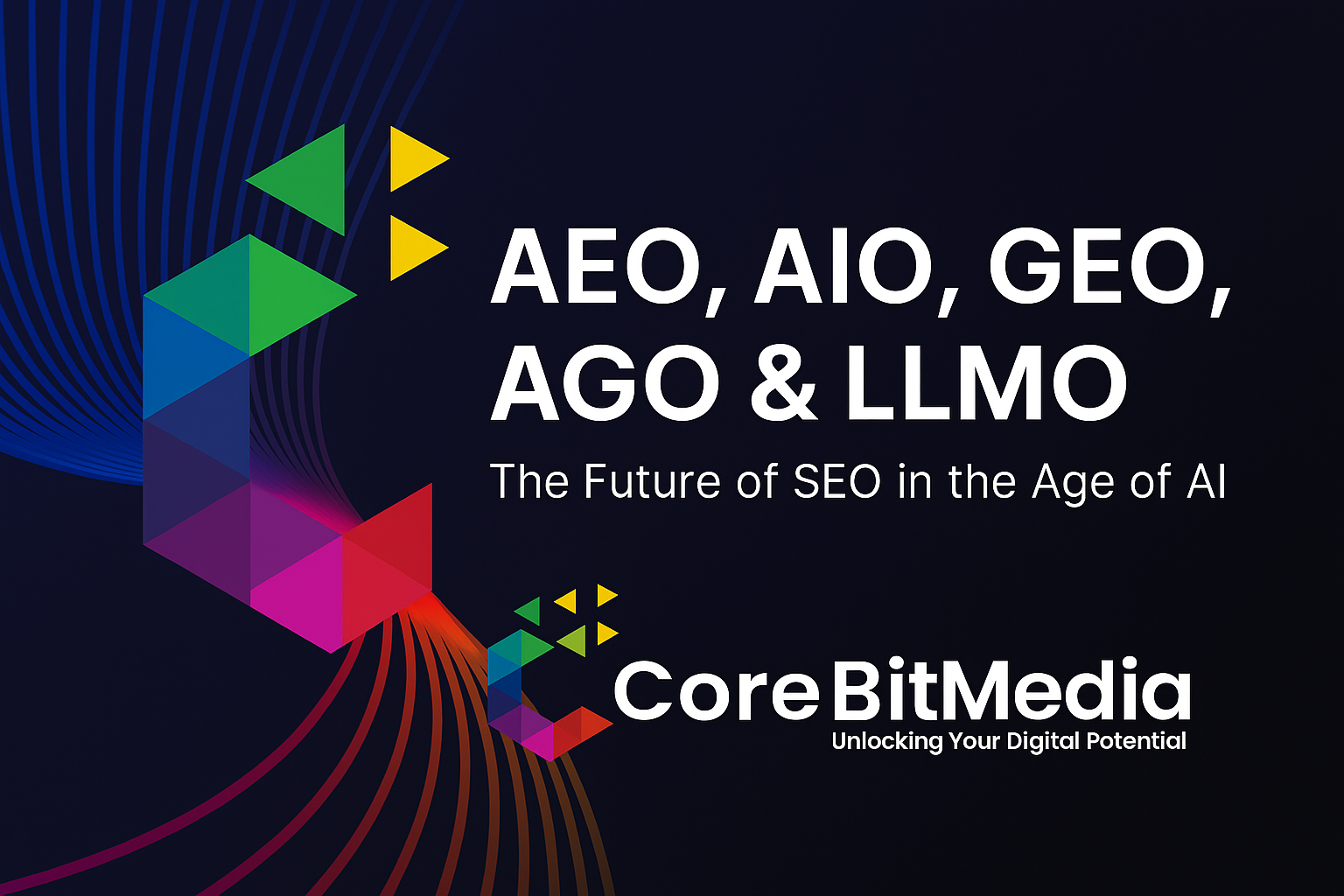
Blogs
AEO, AIO, GEO, AGO & LLMO: What Every Marketer Needs to Know
8/16/2025
Quick Answer
AEO, AIO, GEO, AGO, and LLMO extend traditional SEO into optimizing for AI assistants and generative engines — using schema, structured metadata, and authoritative content so answers surface in AI summaries, not just search rankings.
The digital world is shifting fast. Traditional SEO is no longer the only way to stay visible. With AI assistants, voice search, and generative engines entering the picture, marketers must understand new optimization models.
Focus: Traditional SEO targets keywords and SERP rankings. AEO focuses on delivering quick, factual answers directly in search or through voice assistants. AIO ensures AI systems can read and interpret your content. GEO positions your content to appear in AI-generated overviews and summaries. AGO ensures your content is useful for generative AI tools. LLMO focuses on building long-term authority so large language models recognize and cite your brand as a trusted source.
Content Style: Traditional SEO favors long-form, keyword-optimized blogs. AEO favors short, conversational, FAQ-based content ideal for snippets or voice responses. AIO favors structured, metadata-rich content. GEO favors contextual, data-backed content with references AI engines can confidently include in summaries. AGO favors modular content pieces AI tools can adapt into various outputs. LLMO favors authoritative content backed by research, whitepapers, or unique insights.
Tools & Techniques: backlinks and on-page optimization for traditional SEO; schema markup, structured FAQs, and featured snippets for AEO; NLP-friendly formatting and clear metadata for AIO; topical clustering and credible referencing for GEO; APIs and flexible content formats for AGO; strong brand mentions and authoritative backlinks for LLMO.
Audience: humans searching on Google (traditional SEO); voice assistants like Siri and Alexa (AEO); AI systems crawling and indexing the web (AIO); AI-powered search assistants and generative overviews (GEO); content generators and chatbots (AGO); large language models themselves (LLMO).
Success Measurement: SERP rankings and traffic (traditional); snippets or voice answers earned (AEO); how well AI parses your content (AIO); inclusion in AI-generated summaries (GEO); brand mentions in AI outputs (AGO); being consistently quoted or cited (LLMO).
Time Horizon: short to medium-term for traditional SEO and AEO; medium-term for AIO; ongoing for GEO and AGO; long-term for LLMO.
Summary
Traditional SEO is still the base, but the future lies in multi-dimensional optimization. If you want your brand to stay visible in both search engines and AI-powered systems, you must integrate AEO, AIO, GEO, AGO, and LLMO into your content strategy. This layered approach ensures your brand isn't just ranking in Google but also recognized, reused, and recommended by AI models everywhere.