← All Blogs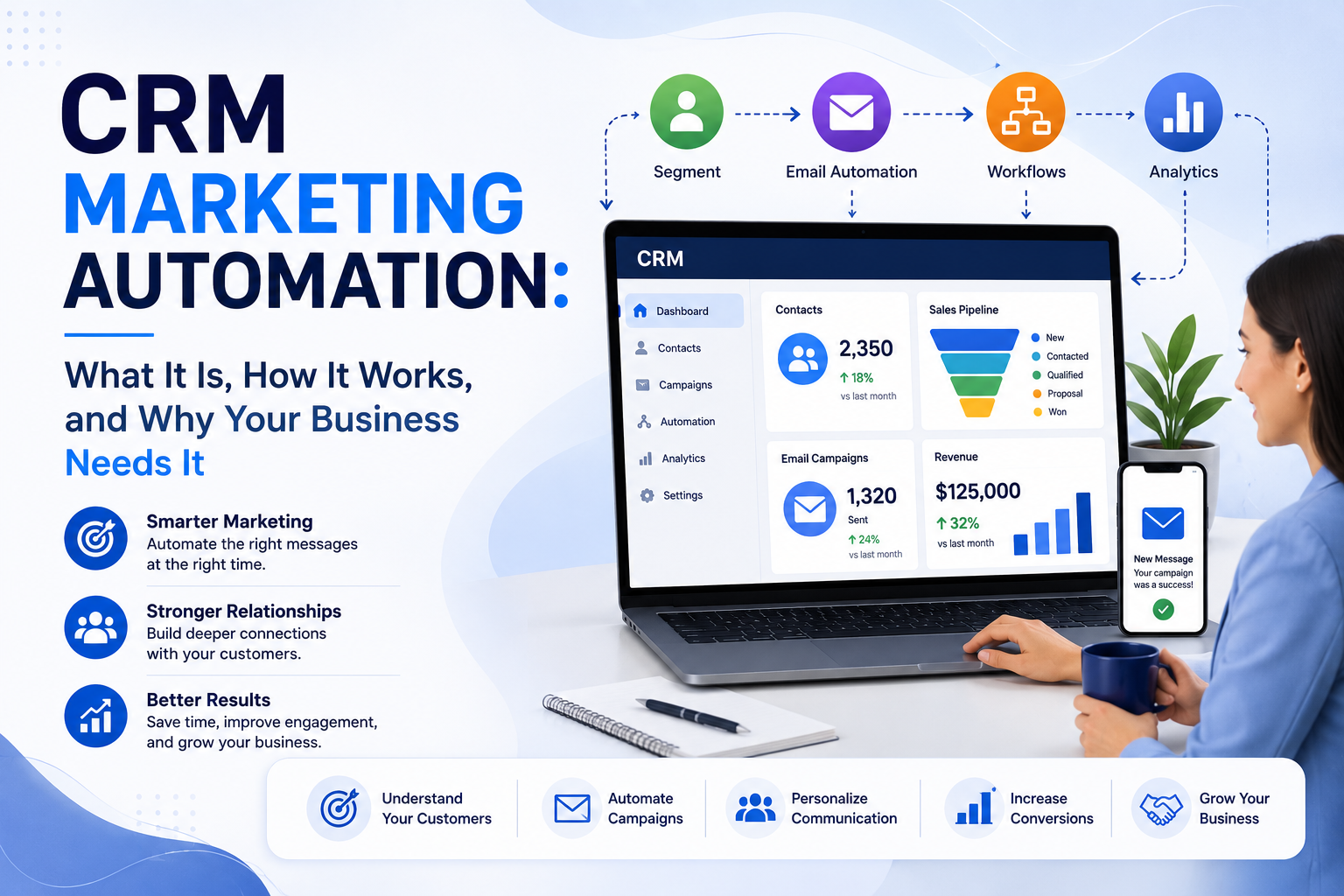
Digital Marketing
CRM Marketing Automation: What It Is, How It Works, and Why Your Business Needs It
8/16/2026
Quick Answer
CRM marketing automation combines customer data with automated workflows (email/SMS triggers, lead scoring, segmentation) to nurture leads and retain customers without manual repetitive work.
CRM marketing automation is the practice of using customer relationship management software to automatically manage, personalize, and trigger marketing actions — like emails, follow-ups, lead scoring, and campaigns — based on customer behavior and data. It combines your customer database with automated workflows so your team can nurture leads, retain customers, and drive revenue without manual, repetitive work.
What Is CRM Marketing Automation?
Traditional CRMs store customer data. Marketing automation triggers actions based on that data. Combined, you get a system that automatically sends personalized emails based on behavior, scores and routes leads to the right sales rep, segments audiences by interest or engagement, triggers follow-ups after a form fill or purchase, and tracks the full customer journey from first click to closed deal.
Why CRM Marketing Automation Matters for Growing Businesses
Manual marketing doesn't scale. As lead volume grows, it becomes impossible to personally follow up with every contact at the right time. Automation solves this by working around the clock. Key benefits: time savings, higher lead conversion, better customer retention, consistent branding, data-driven decisions, and sales/marketing alignment.
Core Features to Look For in a CRM Marketing Automation Platform
Lead Scoring and Segmentation — automatically rank leads by engagement and route hot leads to sales. Email and SMS Automation — trigger personalized messages based on actions like website visits or cart abandonment. Workflow Builders — visual, drag-and-drop tools to design multi-step campaigns without a developer. Analytics and Reporting — real-time dashboards tracking open rates, conversions, pipeline value, and ROI. Integration Capabilities — seamless connections with your website, ad platforms, e-commerce tools, and sales software. Personalization at Scale — dynamic content that adjusts based on customer data.
Common Use Cases
Lead nurturing, onboarding sequences, re-engagement campaigns, post-purchase follow-ups, event and webinar promotion, and renewal/retention campaigns.
How to Get Started
Audit your current customer journey to identify manual, repetitive touchpoints. Choose a platform that fits your business size and goals. Clean and organize your customer data. Start with one workflow before scaling to more complex journeys. Test and optimize continuously. Train your team so sales and marketing both understand how the system works together.
Common Mistakes to Avoid
Automating too much, too fast, without testing first. Neglecting data hygiene, leading to poor personalization. Treating automation as "set it and forget it." Failing to align sales and marketing workflows. Overlooking mobile optimization.
Frequently Asked Questions
What is the difference between a CRM and marketing automation software?
A CRM stores and manages customer relationship data, while marketing automation software triggers marketing actions based on that data. Many modern platforms combine both functions.
Is CRM marketing automation only for large businesses?
No. Small and mid-sized businesses often benefit the most, since automation replaces tasks that would otherwise require hiring additional staff.
How long does it take to set up CRM marketing automation?
Basic workflows can be live within a few days. More advanced, multi-step strategies typically take a few weeks to design, test, and optimize.
Does CRM marketing automation replace the need for a marketing team?
No. Automation handles repetitive tasks and timing, but strategy, creative content, and campaign optimization still require human oversight.
What industries benefit most?
Nearly every industry, especially e-commerce, real estate, healthcare, professional services, and B2B companies with longer sales cycles.
How do I measure success?
Track email open and click-through rates, lead-to-customer conversion rate, customer retention rate, and pipeline revenue generated through automated workflows.
Can CRM marketing automation improve customer retention, not just new leads?
Yes — automated renewal reminders, loyalty campaigns, and re-engagement sequences are highly effective at keeping existing customers active and reducing churn.